Modest Workwear That Photographs Well: For LinkedIn & Events
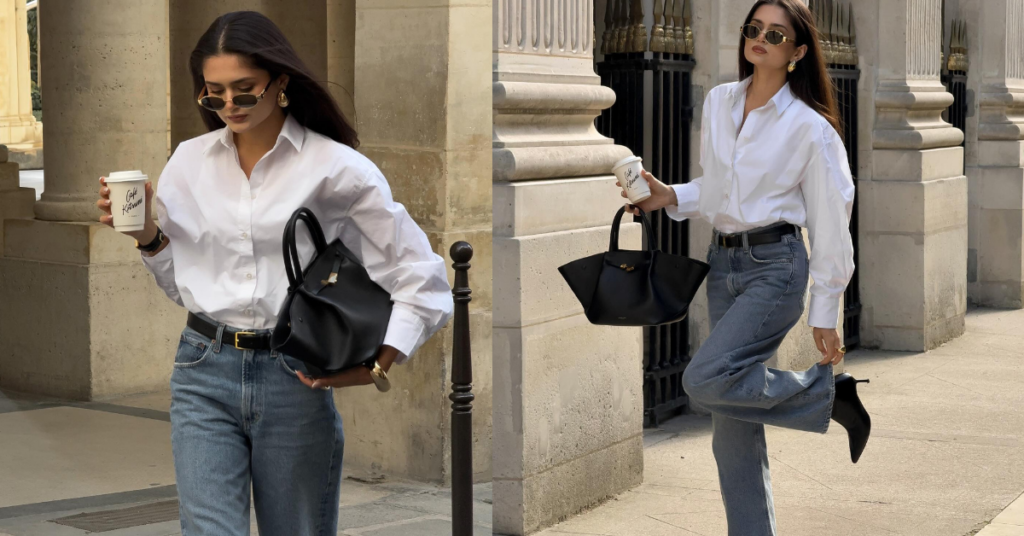
IG: andreiagvr
Most “work outfits” look fine in a mirror but fall apart on camera. A blazer that felt sharp can look boxy. A pretty print can turn into visual noise. A fabric that seemed smooth can catch light and glare.
For LinkedIn photos, panel stages, and event snapshots, you’re dressing for three things at once: real life, lighting, and camera crop. The good news is you do not need a totally separate wardrobe. You just need a few camera-friendly rules and a couple of go-to formulas that keep you modest, credible, and easy to photograph.
Based on headshot guidance from photographers and styling advice, the biggest wins are: solid or simple colors, well-fitted layers, avoiding shiny or clingy fabrics, and steering clear of fine patterns that can create moire on video.
Quick answer for skimmers
- Wear solids or large-scale patterns. Tiny checks, tight stripes, and small prints can create moire on camera and look distracting.
- Choose mid-tone to deeper colors (navy, charcoal, forest, burgundy, chocolate) for the most reliable on-camera contrast.
- Prioritize fit and structure. Tailoring photographs better than drape-y, oversized pieces.
- Avoid shiny, clingy, or very thin fabrics that highlight wrinkles and reflect stage lights.
- Necklines matter in a head-and-shoulders crop. Crew, mock, boat, and a modest V usually read clean and professional.
- Keep accessories simple and non-glare. Camera and stage lights can exaggerate sparkle and metal reflections.
- Modesty-friendly layering is your advantage: blazers, structured cardigans, longline vests, and midi dresses are naturally camera-ready.
If you only do one thing: wear a solid mid-tone top under a structured layer (blazer or longline jacket). It instantly looks more “panel-ready” than almost anything else.
What actually changes between LinkedIn, panels, and events
What stays the same
- Coverage you feel calm in (no tugging, adjusting, or second-guessing).
- Structure (tailored shoulders, defined waist, clean lines).
- Simple visuals (solid colors, minimal pattern, low-fuss accessories).
What changes
- Camera crop: LinkedIn is often face-first, shoulders-up. Panels are full-body and seated. Events are unpredictable angles.
- Lighting: headshots are controlled; stages can be harsh; event photos are flash-heavy.
- Movement: panels involve sitting, mic packs, walking on stage, turning to face the audience.
This won’t work if your outfit requires constant fixing (slipping scarf, gaping neckline, fussy wrap top). Cameras love to catch the exact second you’re adjusting something.
The decision framework: “Camera-proof” modest workwear in 5 checks
1) The moire check (video panels and recorded talks)
If your piece has tight stripes, tiny checks, micro-pleats, or small high-contrast prints, it can create a wavy “buzzing” effect on video (moire). Multiple production and photography sources specifically warn against fine patterns for this reason.
Safer swaps
- Solids
- Texture without pattern (crepe, ponte, matte knit)
- Large-scale prints (big florals, wide stripes)
2) The shine check (stage lights are not forgiving)
Photographers often recommend avoiding very shiny or clingy materials because they reflect light and emphasize wrinkles and texture.
Watch out for
- Satin that reads “mirror-y” under light
- Thin polyester that clings
- Sequins or heavy metallic threads (unless the event is explicitly evening-glam)
3) The fit check (camera adds visual weight)
A repeated headshot tip: baggy clothing reads bigger and less intentional on camera, while well-fitted pieces look polished.
You do not need tight. You need “skimming and shaped.”
4) The neckline check (LinkedIn crops hard)
In a small profile photo, your neckline is basically your “frame.” Solid colors and calmer necklines tend to keep attention on your face.
Most reliable
- Crew, mock neck, boat neck, modest V, collared shirt
5) The movement check (sitting and microphones)
Before a panel, sit down in your outfit and do a quick “talking test”:
- Do sleeves pull?
- Does the skirt ride up?
- Does the blazer bunch?
- Is there a place to clip a mic pack or run a wire?
The core principle that makes modest outfits photograph well
I usually tell people to stop trying to look “fashiony” on stage. Your job is to look clear, credible, and easy to focus on. That’s it.
Camera-friendly modest workwear is basically:
- Simple color
- Clean lines
- One intentional layer
- One deliberate detail
Modest styling resources also lean on structured layering (blazers, structured cardigans, longline vests) and midi/maxi silhouettes because they read professional while maintaining coverage.
What to wear, specifically: 6 camera-proof outfit formulas
1) The LinkedIn top-half formula (fastest win)
Solid top + structured layer + minimal jewelry
- Top: knit shell, mock neck, or blouse in a mid-tone/deeper shade
- Layer: blazer, longline cardigan, or tailored jacket
- Jewelry: small earrings, simple chain
Why it works: solid colors are repeatedly recommended for headshots and small profile photos because patterns get noisy when the image is tiny.
Optional. Skip it if you hate layers: add structure with a top that has shape (a firm knit, a crisp collar, or a more tailored blouse).
2) The “panel uniform” (designed for sitting)
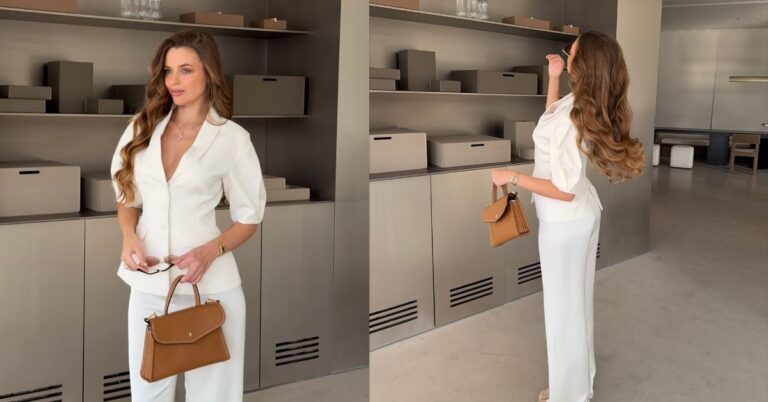
Tailored blazer + midi skirt or tailored trousers + closed-toe shoe
- Choose matte fabrics
- Keep the skirt at a length that stays modest when seated
Modest workwear guides frequently call out blazers and midi lengths as staples, and they also happen to photograph well because they create clean lines.
3) The dress that behaves on camera
Midi dress with sleeves + belt (optional) + structured jacket
This is the easiest way to look pulled together in event photos because it’s one clean column of color. Modest sources commonly recommend midi/maxi dresses with sleeves or higher necklines for professional settings.
Small upgrade: a belt that defines shape (not a loud buckle that reflects flash).
4) The monochrome set (best for events and step-and-repeats)
One-color outfit + subtle texture + one accent
Think: navy top + navy trousers, or cream knit + cream skirt, with a blazer in the same family.
Headshot wardrobe guidance often favors simple, solid colors because they keep the focus on you and stay clean under different lighting.
5) The “modest statement” look (when you want personality)
Classic base + one statement accessory
- Base: solid dress or tailored separates
- Statement: scarf, interesting collar, bold earrings, or a standout bag
Trade-off with no solution: statement accessories can read “creative leader” in one room and “trying too hard” in another. That’s just context.
6) The winter stage formula (when coats stay on in photos)
Long coat + tailored base + boots
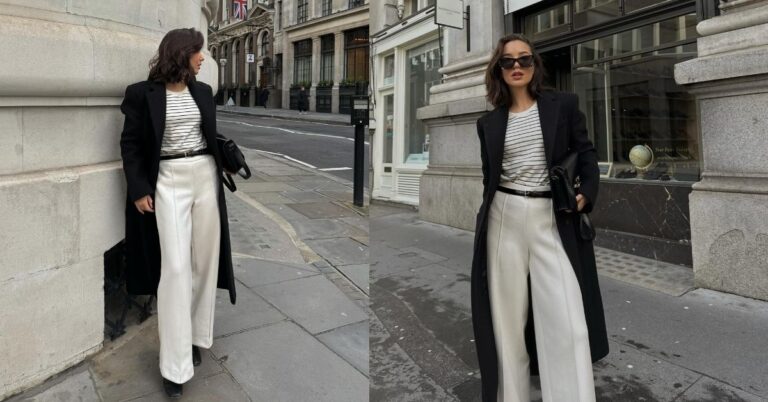
If the venue is cold and your coat will be in photos, treat it like part of the outfit. Choose a coat with structure and a clean lapel.
Color and pattern rules that keep you looking sharp
The safest colors (work across most skin tones and backgrounds)
- Navy, charcoal, forest, deep teal, burgundy, chocolate, camel, cream (with enough contrast)
Multiple headshot resources recommend solids and mid-to-deeper tones because they read crisp and professional on camera.
Colors to be careful with
- Neon (can reflect onto your face and overpower the frame)
- Very bright white (can blow out under flash depending on lighting)
- Very light beige close to your skin tone (can look washed out in some photos)
Patterns that usually fail on camera
- Fine stripes, small checks, tiny high-contrast prints (moire risk)
If you love patterns, go bigger and softer: larger prints, lower contrast, or pattern only in one piece.
Fabrics that photograph well (and the ones that don’t)
Best bets
- Crepe, ponte, structured knits, matte wool blends, heavier cotton poplin
These hold shape and do not glare.
Proceed carefully
- Satin and silk: beautiful, but can reflect light depending on weave and color
- Linen: gorgeous texture, but wrinkles show clearly
Avoid for most professional photos
Photographers commonly advise against clingy or shiny materials because they can highlight creases and reflect light in unflattering ways.
A practical “camera test” you can do at home in 3 minutes
- Take a selfie in window light (no filter).
- Take a photo under overhead indoor light (the worst case).
- Record a 10-second video and move a little.
Look for:
- Moire shimmer on patterns
- Shine hotspots on chest, shoulders, forehead
- Wrinkles that look louder on camera than in real life
- Anything you keep adjusting
Common mistakes (and quick fixes)
Mistake: Wearing a beautiful busy print because it’s “your style.”
Fix: keep the print in the skirt or scarf, and make the top solid (especially for LinkedIn).
Mistake: Oversized everything.
Fix: keep one piece relaxed, but add structure somewhere (shoulders, waist, or a sharper layer).
Mistake: Shiny fabric under bright light.
Fix: swap to a matte version, or add a matte layer on top.
Mistake: Tiny patterns on video panels.
Fix: go solid or large-scale pattern to reduce moire risk.
Outfit variations by use case
Best for LinkedIn (tight crop)
- Solid top + blazer
- Collared shirt + cardigan with structure
- Mock neck knit + simple earrings
Solids are frequently recommended for headshots because they keep attention on your face.
Best for panels (seated + stage lights)
- Blazer + midi skirt
- Suit set + matte blouse
- Midi dress + structured jacket
Avoid fine patterns and shiny fabrics for on-camera reliability.
Best for networking events (standing + flash photos)
- Monochrome separates + statement bag
- Midi dress + long coat
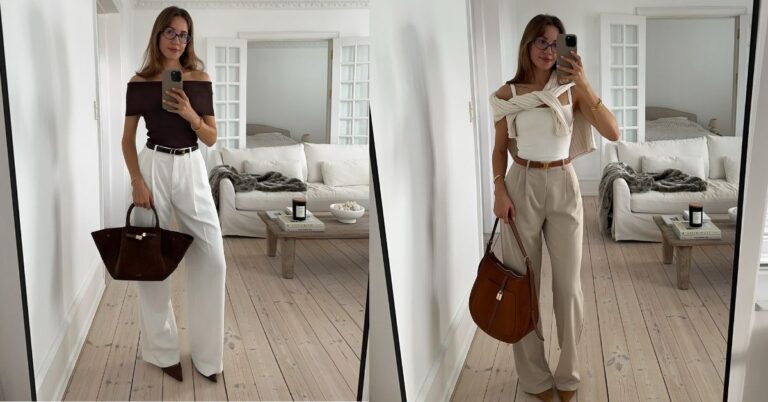
- Tailored trousers + elevated knit
Best for modest + warm weather
- Lightweight blazer or vest + sleeved dress
- Poplin shirt + midi skirt
- Matte knit set
Modest workwear sources specifically highlight layering pieces and dresses as easy professional building blocks.
FAQ
Do I have to wear a blazer to look professional on camera?
No, but structure helps. If you skip a blazer, choose a top with shape (collar, firm knit, or a tailored blouse). Fit matters more than the specific item.
Why do stripes and tiny prints look weird on video?
It can be moire, an interference effect that shows up when fine patterns interact with camera sensors. The simplest avoidance strategy is wearing solids or less complex patterns.
What colors look best for LinkedIn photos?
There’s no single “best,” but headshot guidance often recommends solid, mid-tone to deeper colors and avoiding neon or overly busy patterns.
Can I wear black?
Yes, but add a little separation (a neckline detail, a blazer with texture, or a different-toned layer) so it doesn’t flatten in photos.
What’s the biggest “looks fine in person, bad in photos” fabric?
Very shiny or clingy synthetics often photograph poorly because they reflect light and show creases.
I wear hijab or prefer fuller coverage. Any camera-specific tips?
Keep the face area clean and high-contrast (solid scarf, minimal busy print near the face). Structure and solids do most of the work, and layering is already a strength of modest styling.
Just a little note - some of the links on here may be affiliate links, which means I might earn a small commission if you decide to shop through them (at no extra cost to you!). I only post content which I'm truly enthusiastic about and would suggest to others.
And as you know, I seriously love seeing your takes on the looks and ideas on here - that means the world to me! If you recreate something, please share it here in the comments or feel free to send me a pic. I'm always excited to meet y'all! ✨🤍
Xoxo Alice