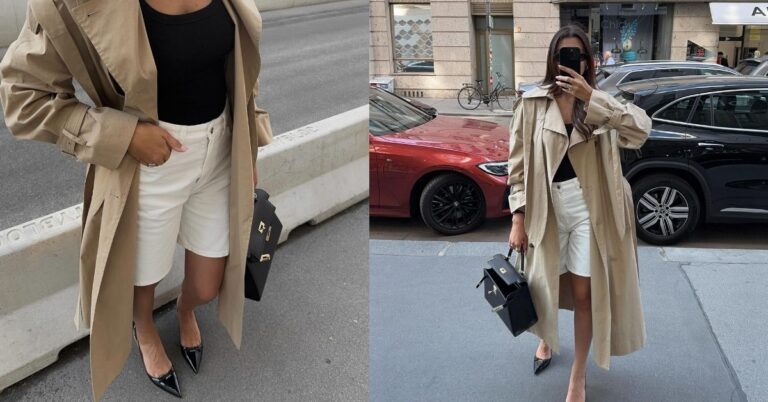
Repeat Work Outfits Without Anyone Noticing (Capsule Way)
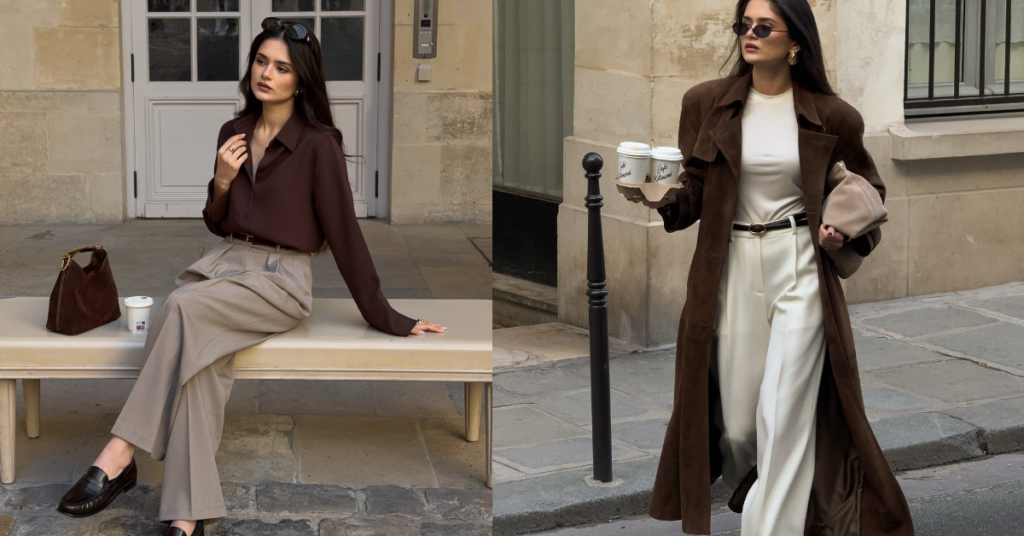
IG: andreiagvr
Repeating outfits at work is normal. Most people just do it quietly, with enough small changes that it never registers as “the same thing again.” The real trick is not owning more clothes. It is repeating a few strong silhouettes and rotating the parts people actually notice: your top layer, neckline area, shoes, and color near your face.
If you dress modestly, you already have an advantage. Modest outfits are built around consistent coverage and layering, which makes a capsule wardrobe easier to repeat without looking like you are wearing a “uniform.” You just need a system that keeps you:
- comfortable and covered
- professional for your office culture
- not constantly thinking about outfits
Clothing also changes how people perceive you (and how you feel in your role), so you want repetition that reads as “reliable and put-together,” not “stuck.”
Quick answer (for skimmers)
- Repeat the same 2–3 silhouettes (example: trouser + knit + layer; midi dress + layer; midi skirt + knit).
- Keep your base consistent, rotate your “notice zone”: blazer/cardigan/jacket, scarf, shoes, bag.
- Use a tight color palette (2 neutrals + 1 accent) so everything mixes and repeats look intentional.
- Create 12 “outfit recipes” from 10–14 pieces, then stop improvising.
- Avoid loud statement items if you want repetition to disappear.
- Tailoring is your stealth tool. Modest + well-fitted reads elevated, even when repeated.
- Photograph your best outfits once so you can repeat them on purpose.
- Have one “meeting upgrade” layer that instantly raises polish.
If you only do one thing: build a modest base outfit you can wear twice a week, then rotate only the top layer and shoes.
The mindset shift that makes this easy
People do not remember outfits the way you do. They remember:
- whether you looked appropriate for the room
- whether you looked consistent with your “role”
- the items that stand out (bright colors, unusual shapes, bold prints, loud shoes)
Research on person perception suggests dress is a meaningful input in how we form impressions of others, but that does not mean people are tracking your exact combinations day to day.
So your goal is simple: remove the memorable elements from the repeated part and concentrate the “variation” in easy swap items.
Step 1: Pick your modest “core silhouette” (this is the secret)
Choose two of these. Two is enough to create variety without chaos.
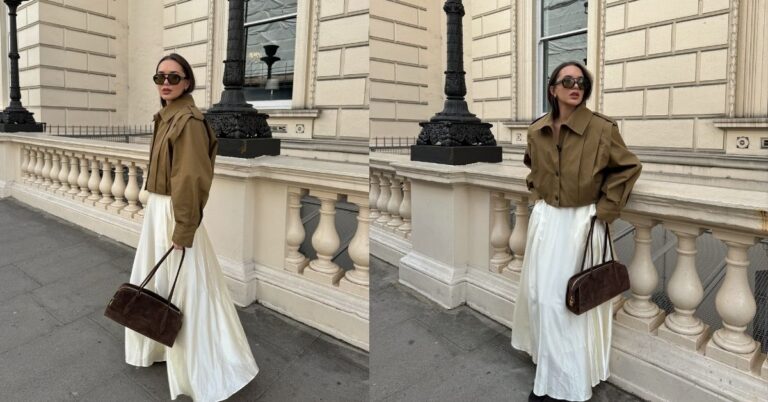
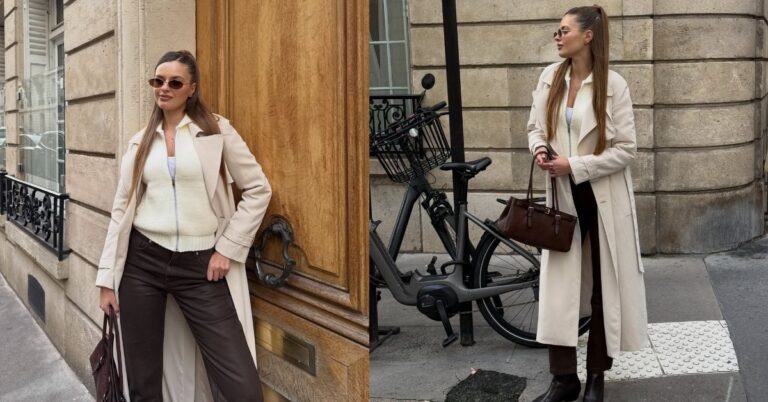
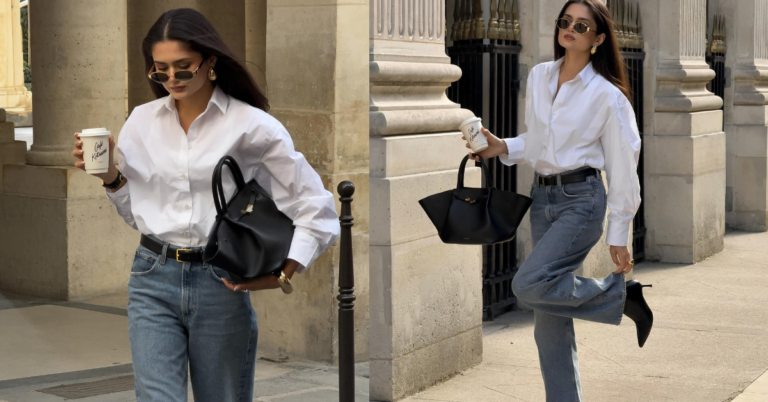
Silhouette A: Trousers + top + top layer
- straight or wide-leg trousers (not clingy)
- knit top, button-up, or blouse with your preferred neckline and sleeve coverage
- blazer, knit blazer, structured cardigan, longline vest
Silhouette B: Midi dress + top layer
- long-sleeve midi dress, or a sleeveless midi layered with a base
- blazer/cardigan/coat depending on season
Silhouette C: Midi skirt + knit + top layer
- midi skirt in thicker fabric (or lined)
- fine knit or woven top
- cardigan/blazer
This is where I get opinionated: most people should stop trying to build endless variety and just choose one default silhouette that always works. It makes outfit repetition invisible.
Step 2: Understand the “notice zone”
If you want to repeat without anyone clocking it, focus on what people naturally notice in conversation:
- your face area (color near the face, neckline, scarf)
- your third piece (blazer, cardigan, jacket)
- your shoes (especially in offices where shoes signal formality)
Everything else can repeat quietly.
That is why capsules work so well for modest dressing. Layering creates natural variation without changing coverage.
Step 3: Build the modest capsule (10–14 pieces) that repeats well
The base pieces (repeatable, low-notice)
- 2 trousers (one dark, one mid-tone)
- 1 skirt or 1 additional trouser (depending on your life)
- 2 tops that are “meeting-safe” on their own
- 1 top that is slightly softer (still professional)
- 1 dress (optional but powerful for variety)
The top layers (the stealth repeat-hiders)
- 1 structured blazer or coat-style layer
- 1 knit blazer or structured cardigan
- 1 lighter layer (longline vest, overshirt, or cardigan)
Shoes and bag (do most of the signaling)
- 2 pairs of shoes that fit your office (example: loafers + ankle boots)
- 1 work bag you use nearly every day
Modesty add-ons
- camisoles or base layers that make necklines and fabrics predictable
- opaque tights for skirt/dress days
This is optional. Skip it if you already have base layers you trust.
For business casual norms, it helps to anchor your capsule in pieces that are widely accepted as “default professional,” then adapt.
Step 4: Choose a “tight palette” that makes repetition invisible
Pick:
- 2 neutrals (example: navy + cream, black + grey, olive + beige)
- 1 accent you actually like near your face (example: soft blue, burgundy, deep green)
If you do this, almost every top works with every bottom, and repetition looks like consistency.
A clear trade-off: the tighter your palette, the less noticeable repetition becomes, but the more likely you are to feel bored if you crave color. No perfect fix there.
Step 5: Create outfit recipes (so you are not inventing outfits daily)
Instead of thinking “pieces,” think “recipes.”
Here are 12 modest business-casual recipes you can reuse forever:
- Dark trousers + knit top + structured blazer
- Dark trousers + button-up + cardigan
- Dark trousers + blouse + longline vest
- Mid-tone trousers + knit top + blazer
- Mid-tone trousers + button-up + knit blazer
- Midi skirt + knit top + blazer
- Midi skirt + button-up + cardigan
- Midi dress + blazer
- Midi dress + cardigan + belt (if you like belts)
- Trousers + fine knit + coat-style layer
- Trousers + blouse + scarf + blazer
- Skirt or trousers + tonal outfit (same color family top and bottom) + structured layer
Once you have these, repeating becomes boring in the best way.
How to repeat the same base outfit twice a week without anyone noticing
The “base repeat” method
Pick one base you love, like:
- black trousers + cream top
Wear it twice in a week, but change:
- the top layer (blazer vs cardigan)
- the shoes (loafers vs boots)
- one accessory near your face (scarf, earrings, neckline layer)
It will read like two different outfits because the “notice zone” changed.
The “twin outfit” method
Buy or use the same silhouette in two colors:
- the same trouser cut in navy and black
- the same top style in cream and soft blue
It looks like variety, feels like a uniform.
Modest-specific tips that keep repetition looking polished
Make coverage look intentional
Modesty reads most professional when it looks designed, not improvised:
- stable necklines (crew, mock neck, higher V with a base)
- sleeves that do not ride up constantly
- fabrics that are opaque under office lighting
Tailoring is your multiplier
If your trousers fit beautifully at the waist and hip, you can repeat them constantly and nobody cares. If they sag or bunch, people notice the discomfort more than the repetition.
Watch “clinging” and “pulling”
A lot of modest outfits go wrong because the garment is technically covered but visibly strained when sitting or reaching. Choose cuts that move.
The mistake list (and how to fix it fast)
Mistake 1: Too many statement pieces
If everything is “interesting,” repetition becomes obvious because each item is memorable.
Fix: keep statement items to 1 per outfit, or keep them out of the capsule.
Mistake 2: Repeating the same top layer
Your blazer is the thing people notice. If you repeat the same blazer daily, that is when repetition becomes visible.
Fix: two top layers minimum.
Mistake 3: Buying “modest” but shapeless
Oversized on oversized can read tired.
Fix: pick one relaxed piece at a time. Keep the rest clean.
Mistake 4: Trying to be different every day
This creates decision fatigue and closet churn. The whole point is to routinize the small stuff so you can spend energy elsewhere.
When repeating can actually help your reputation
There is a reason “work uniforms” and consistent dressing show up again and again in professional advice. Consistency is often read as stability.
Also interesting: some research suggests that strategic norm violations can signal confidence and status in certain contexts, but it is not a universal hack.
Practical takeaway:
- If you are early-career or new to an office, repetition + polish tends to be safer.
- If you are established in your role, you can sometimes “break” the office uniform a little and still look credible.
A simple weekly rotation that looks like a full closet
Here is an example pattern that repeats invisibly:
Mon: Outfit A (dark trousers + top 1 + blazer 1)
Tue: Outfit B (mid trousers + top 2 + cardigan)
Wed: Outfit A again, but swap shoes + scarf + blazer 2
Thu: Dress + cardigan
Fri: Skirt + knit + blazer 1
That is essentially 2 bottoms repeating, 2 layers repeating, and nobody will notice because the notice zone changes.
This won’t work if…
If you are in a very public-facing role where you are filmed or photographed constantly (media, sales content, events) and outfits are part of your brand, repetition may be noticed more easily. In that case you can still use a capsule, but you may want more visible variety in color or silhouettes.
FAQ
How many pieces do I need for a modest work capsule?
Usually 10–14 core pieces plus shoes. If you want repetition to disappear, put your budget into top layers and shoes.
What if coworkers make comments about repeating?
Stay calm and boring: “I like having a simple work wardrobe.” Then move on. Most people are not judging. They are making conversation.
Can I repeat the same trousers 3 times a week?
Yes, if they hold shape and look clean. Rotate top layers and shoes. Get them tailored if needed.
How do I keep repetition from feeling boring to me?
Add variation where it matters to you: one accent color, one texture (knit vs woven), one signature accessory. Keep the base stable.
Is there a professional downside to a “uniform”?
Sometimes. In creative environments, dressing too uniform can read as less expressive. In conservative environments, dressing too creative can read as less serious. You are choosing which risk you can live with.
Does what I wear actually change how I perform?
Evidence suggests clothing can influence psychological processes and attention in some contexts (often discussed as “enclothed cognition”), but it is not magic. Think of it as a small nudge, not a personality transplant.
Just a little note - some of the links on here may be affiliate links, which means I might earn a small commission if you decide to shop through them (at no extra cost to you!). I only post content which I'm truly enthusiastic about and would suggest to others.
And as you know, I seriously love seeing your takes on the looks and ideas on here - that means the world to me! If you recreate something, please share it here in the comments or feel free to send me a pic. I'm always excited to meet y'all! ✨🤍
Xoxo Alice