3 Outfit Check: Simple Framework for Modest Office Dressing
Skip the intro · jump to the list ↓
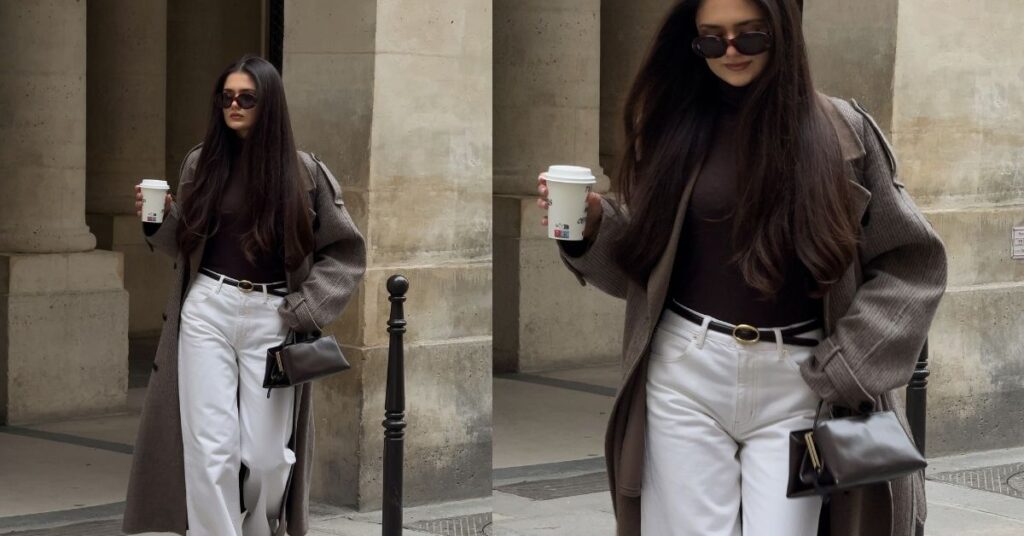
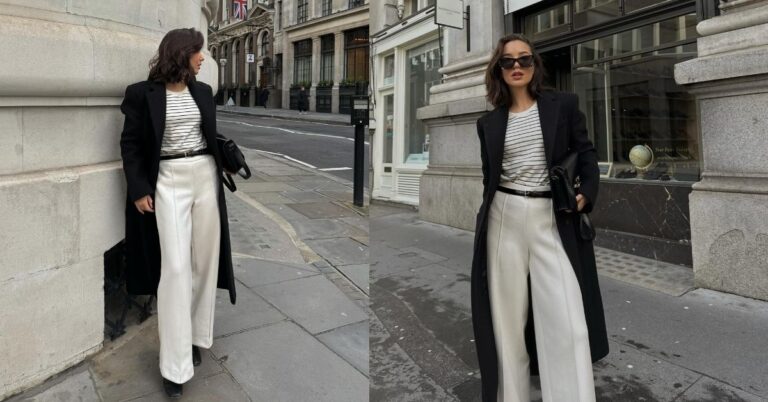
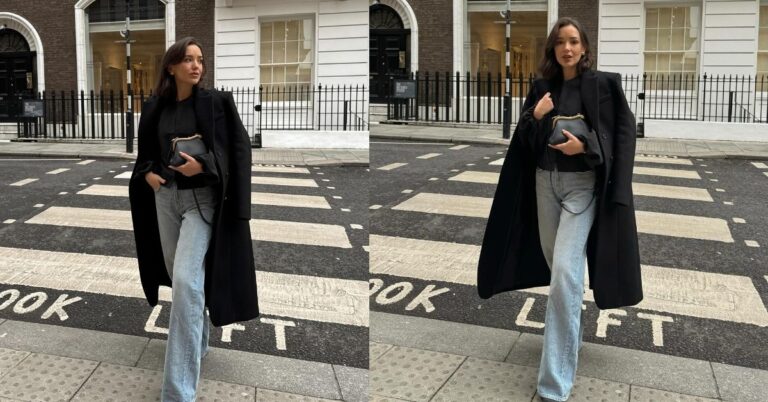
IG: andreiagvr
Modest office dressing gets weirdly complicated because most advice is about how an outfit looks when you are standing still. Real workdays are not standing-still days. You sit, reach, present, walk fast, carry things, and end up under different lighting than you expected.
So instead of trying to memorize “rules” (neckline this, hemline that), use a simple check you can run in under two minutes. It is designed for the moment right before you leave the house, step into a meeting, or turn your camera on.
Also, modest does not have to mean invisible. In fact, modest dressing often makes you look more authoritative because you remove distractions and look intentional. Research reviews in psychology argue dress meaningfully influences person perception, including status and competence impressions.
The 3-Point Outfit Check
Point 1: Coverage + Opacity
Ask: If I move normally, will anything show that I do not want showing?
This is not just about skin. It is also about:
- Sheer fabric in bright light
- Gapping buttons
- A neckline that shifts when you lean forward
- A hem that rides up when you walk
- Waistbands that dip in the back when you sit
Quick test (30 seconds):
- Stand in front of a mirror.
- Raise your arms like you are using a whiteboard.
- Sit down.
- Lean forward as if you are reaching for a laptop charger.
If you need to tug, pin, or constantly adjust, it fails Point 1.
Lighting check (10 seconds):
Hold the fabric up to a window or bright lamp. If you can clearly see a hand silhouette through it, assume it will read “less modest” in office lighting.
This won’t work if your office has a strict uniform or safety requirements (healthcare, labs, factory floor). In those settings, modesty has to fit the policy first, then you add polish within that box.
Point 2: Fit + Movement Stability
Ask: Does this outfit stay put when I do my job?
Modesty is not just coverage. It is coverage that does not shift.
Look for these common “quiet fails”:
- Skirt that twists when you walk
- Pants that slide down when you sit (hello lower back exposure)
- Sleeves that ride up and make you fidget
- A top that creeps up every time you reach
- Shoes you cannot walk confidently in
The “no-fidget rule”: If you think about the outfit more than once every ten minutes, it is not stable enough for meeting-day authority.
Quick movement test (30 seconds):
- Take five normal steps.
- Turn to the side.
- Sit, then stand.
- Reach forward with one arm like you are clicking slides.
If the outfit stays where it started, you pass Point 2.
A small but useful idea here: some research on “enclothed cognition” suggests clothing can influence how you feel and perform, through both symbolism and the physical experience of wearing it. In plain English: when your clothes feel secure and functional, it is easier to act secure and functional.
Trade-off with no perfect fix: More structured, more modest outfits can feel hotter or more restrictive, especially if you sit a lot. Sometimes you have to choose between maximum coverage and maximum comfort.
Point 3: Authority Signals
Ask: Does this look intentional in this room, for this role?
Authority does not require being flashy. It requires looking like you meant to show up exactly like this.
You only need two authority signals to shift an outfit from “modest” to “modest and credible”:
Pick 2:
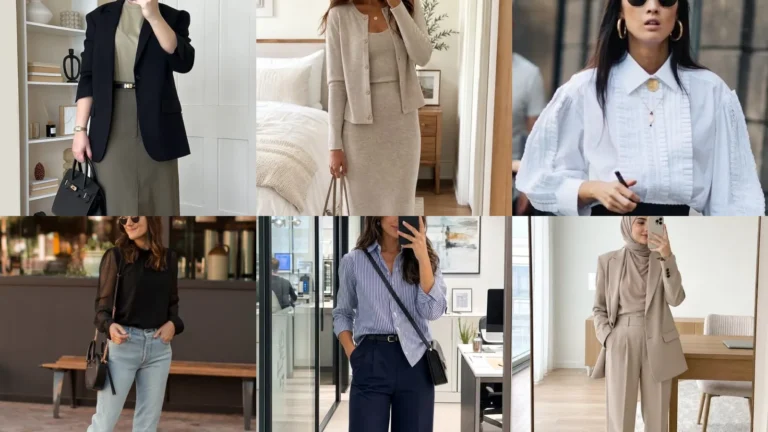
- Structure: blazer, tailored jacket, knit blazer, sharp cardigan, matching set
- Clean lines: not clingy, not sloppy, just skimming and pressed
- Polished finish: shoes you can walk in, tidy hair, simple accessories, a bag that matches the formality
If you have those, the rest can be simple.
I usually tell people to stop chasing variety on meeting days. One good default outfit that always passes the 3-point check beats a closet full of “maybe” outfits.
Reality check: Workplace dress codes are often vague, using words like “appropriate,” “revealing,” or “distracting.” SHRM has noted how unclear language like this can create confusion, especially in summer when coverage and comfort collide. If the rules are fuzzy, your best defense is looking intentional and leaving very little room for interpretation.
Putting it together: A 60-second pass/fail
When you are rushed, do this:
- Point 1 (Coverage + Opacity): Can I bend and sit without worry?
- Point 2 (Stability): Will I stop thinking about it once the meeting starts?
- Point 3 (Authority): Do I have at least two authority signals?
If you get 3/3, leave the house.
If you get 2/3, fix the weak point with one swap.
If you get 1/3, save it for a non-meeting day.
Fast fixes (one swap solutions)
If you fail Point 1
- Add a structured layer: blazer, jacket, long cardigan
- Swap to a higher neckline top
- Choose thicker fabric (ponte, twill, lined skirt)
- Add a slip under a skirt or dress (quietly solves a lot)
If you fail Point 2
- Size up and tailor, instead of squeezing into a size that pulls
- Choose waistbands that do not roll
- Avoid tops that require fashion tape to behave
- Swap shoes for something you can actually walk in
If you fail Point 3
- Add one structured piece (fastest upgrade)
- Tighten the palette (neutrals + one accent)
- Simplify accessories (one “finished” thing is better than five fussy things)
This is optional. Skip it if you already wear a uniform-like capsule and you never feel unsure: build a “meeting kit” you keep ready (blazer, shoes, bag, one top). The goal is fewer decisions.
Common mistakes that make modest outfits look less authoritative
- Over-layering to feel covered
Lots of thin layers can look fussy. Fewer pieces with better structure usually looks stronger. - Confusing “loose” with “modest”
You want skimming, not shapeless. Authority needs shape somewhere: shoulders, waist, or hemline. - Ignoring fabric quality and opacity
A modest cut in flimsy fabric can look cheap or overly casual. Modesty is not just inches of coverage. - Wearing shoes that change how you walk
If you cannot stride to the front of the room, it shows. - Dressing for your mirror, not the meeting
The most “correct” modest outfit can still be wrong if it is far more formal than the room. (Sometimes that is fine. Sometimes it creates distance.)
Harvard Business Review has also pointed out that “rules” around work clothes can be selectively enforced, and that traditional business attire can still function as a safer choice in uncertain environments.
Variations: how to apply the check in different settings
Conservative corporate
- Point 3 matters most here.
- Default formula: blazer + modest top + tailored trouser or midi skirt + closed-toe shoe.
Creative office
- You can loosen Point 3, but keep it intentional.
- Try: structured cardigan + solid knit top + wide-leg trouser + sleek sneaker or loafer.
Presenting on stage or to senior leadership
- Keep Point 1 and 2 strict. No fidget outfits.
- Add an “instant authority” piece: matching set or blazer.
On camera (Zoom)
- Prioritize Point 1 at the neckline and shoulders.
- Solid colors and clean necklines usually read strongest.
- Keep accessories simple so they do not flicker or distract.
Hot weather
- Use fabric choices instead of cutting coverage.
- Linen blends, cotton poplin, tropical wool, and lighter ponte can keep you modest without overheating.
- SHRM’s guidance around summer dress code challenges is a good reminder that many workplaces still fall back on vague “appropriate” language in warm months.
FAQ
Is “modest” the same in every workplace?
No. That is the hard part. Many employers use broad dress code language and aim for neutrality and inclusion, but expectations still vary by industry and culture.
Can you look authoritative without a blazer?
Yes. Structure can come from a matching set, a well-cut dress, a knit blazer, or a sharp cardigan. You just need at least two authority signals.
What is the easiest modest outfit formula for meetings?
A simple one: structured layer + modest neckline top + tailored bottom + walkable shoes. It is boring in the best way.
What if you feel overdressed?
You have two options:
- Keep the structure, soften the styling (lighter top color, softer shoe).
- Or accept being slightly overdressed for the meeting because it buys you credibility.
Does clothing really affect how people perceive you?
Evidence reviews argue dress influences person perception, including status and other inferences, and should be treated as a real component of impression formation.