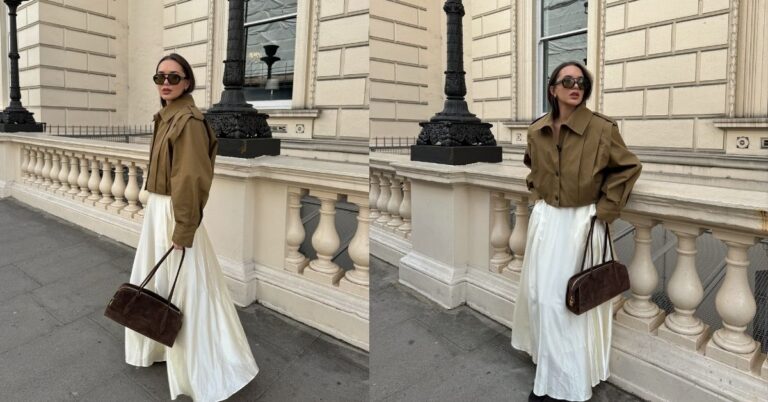
How to Wear Light Colors to Work Without Looking See-Through
Skip the intro · jump to the first look ↓
IG: bugunnegiyecegizz
You put on your favorite light-colored outfit, you think you look absolutely stunning, and you head to work. And then you walk under those blinding, aggressive fluorescent office lights. Suddenly, you catch your reflection in the glass door of the conference room and realize… everyone can see exactly what kind of underwear you put on this morning. Yeah. It is literally the worst feeling in the world.
Let me tell you a quick story so you know I am right there in the trenches with you. It was my second month at my old marketing agency. I was still trying so hard to impress everybody. I had just bought these gorgeous, wide-leg white linen blend trousers. I thought I looked like a chic coastal grandmother mixed with a high-powered CEO. So I strutted right into the 9 AM morning briefing. I confidently went to the front of the room and stood right in front of the massive floor-to-ceiling windows to present my slides.
The morning sun hit my legs from behind. And suddenly, my bright pink underwear with little yellow pineapples on it was on full, glorious display for the entire management team. My boss kind of cleared his throat and looked at his shoes. I looked down, realized the horror of the backlight, and I wanted the floor to just swallow me whole. I am pretty sure I literally scooted out of the room walking backwards when the meeting was over.
It was tragic.
So to save you from having your own pineapple underwear moment, I have basically made it my life’s mission to figure out how to wear light colors to the office without flashing your coworkers.
1. The Golden Rule of Undergarment Shades
Okay, we need to start with the foundation. The absolute biggest mistake people make – and I used to do this all the time – is wearing white underwear under white clothes. It seems so logical, right? White on white. But it is actually the worst thing you can do.
Here is why. When you wear white underwear, it creates a harsh, stark contrast against your natural skin tone. Even under thick white pants, that bright white outline of your underwear will show right through the fabric because it’s lighter than your actual skin. You are basically highlighting your underwear.
What you actually need to do is find undergarments that match your unique skin tone exactly. And I mean exactly. If you have fair skin, you need a soft beige or a pale peach. If you have medium skin, look for warm tans or caramel colors. If you have dark skin, you need rich browns, deep mocha, or espresso shades. The goal is to create zero contrast between your underwear and your skin. If the color blends right into your leg or your waist, it will literally disappear under your clothes.
I know it can be so annoying to shop for these colors because brands sometimes only offer one standard “light beige” shade and act like that works for everyone. But please, take the time to find a brand that carries your specific skin match. SKIMS is obviously great for this, but honestly even Target has stepped up their game lately with a massive range of skin-matching shades.
2. The Magic Red Underwear Trick (Yes, Really)
Okay, if you don’t have underwear that perfectly matches your skin tone right now, I have a secret hack for you. Did you know that red actually disappears under white clothing?
I thought my best friend Sarah was totally messing with me when she told me this. We were getting ready for a brunch, and I was panicking because I wanted to wear a white sundress but all my skin-toned thongs were in the laundry. She just hands me a solid red pair and goes, “Trust me.”
I put it on, put the dress over it, and my mind was literally blown. You couldn’t see a single thing.
It sounds crazy, but it actually has to do with color theory and how light absorbs through fabric. Obviously, you want to avoid anything with lace or texture – stick to seamless, laser-cut red underwear. But a deep, solid red or even a burgundy works like absolute magic. It absorbs the light in a way that doesn’t reflect back through the white fabric. So if you are ever in a pinch, grab the red pair. You will feel so sneaky knowing you have bright red on under your pristine white office trousers.
3. Fabric is Everything – Do the Light Test
Alright, moving on from the underwear drawer. Let’s talk about the actual clothes you are buying. Not all light-colored fabrics are created equal. You can have the best, most perfectly matched undergarments in the world, but if your pants are made of cheap tissue paper, it’s not going to matter.
You absolutely have to get into the habit of doing the “Light Test” whenever you are shopping. I do this every single time I am in a store now. Before you even bother taking that cute cream blouse or white skirt into the fitting room, hold the fabric up to the brightest light you can find in the store. Slip your hand underneath the fabric. If you can clearly see the outline of your fingers or the color of your nail polish through the material, put it back on the rack.
If you can see your hand in the store, everyone will see everything in the daylight.
Look for fabrics that have a bit more weight and substance to them. Instead of a thin, flimsy cotton, look for a thick cotton poplin. Instead of a cheap synthetic blend, try to find a nice heavy crepe. Double-lined fabrics are your absolute best friend. Yes, they might cost a tiny bit more, but it is so worth it to not have anxiety all day at your desk.
I actually had a major online shopping fail with this last summer. I bought this crisp white button-down shirt from a fast-fashion website. It looked amazing on the model. Very high-end, very chic. When it arrived, I swear it was thinner than a coffee filter. I tried to make it work by wearing a camisole underneath, but the shirt was so thin that you could see all the wrinkles and seams of the camisole. It just looked incredibly messy and unprofessional. I ended up just wearing it as a beach cover-up because there was zero chance I could wear it to a client meeting. Save yourself the money and invest in thicker fabrics.
(Look for thick, double-lined fabrics like this. Game changer!)
4. Bring Back the Slip
Okay guys, hear me out on this one. We need to normalize wearing slips again.
I know what you’re thinking. “Anne, a slip? That is something my grandma wears.” And you are totally right. But guess what? Our grandmas looked elegant and polished, and they never accidentally showed off their underwear at Sunday service.
I raided my mom’s closet a few years ago because I had bought this stunning pastel yellow midi skirt. It was just a little bit too sheer in the sunlight, but I loved it too much to return it. My mom handed me this simple, vintage half-slip. It was silky, skin-toned, and hit just above the knee.
I put it on under the skirt and it was like magic. Not only did it make the skirt 100% opaque, but it also made the fabric hang so much better. It smoothed everything out and stopped the skirt from clinging to my legs when I walked.
5. Beware of the Pockets
This is a detail that so many people forget about, but it drives me absolutely crazy. You finally find a great pair of white trousers. The fabric is thick. You’ve got your skin-matching underwear on. You look in the mirror and everything is flawless. But then you turn slightly, and you see them.
The pocket bags.
A lot of brands use a different, cheaper fabric for the inside of the pockets. And in white pants, those pocket bags show right through the front of your thighs like two massive white squares. It totally ruins the clean, elegant look of the pants.
You have a couple of options here. The easiest thing is to just look for pants that have faux pockets or no pockets at all. It gives you a much sleeker silhouette anyway. But if you find pants you absolutely love and they have those annoying visible pocket bags, you can actually fix it.
If you are even a little bit handy, or if you have a local tailor, you can just have the pocket bags cut out and the pocket openings sewn shut. I do this all the time. It costs like ten dollars at my local dry cleaner, and it elevates the pants from looking cheap to looking custom-tailored. Seriously, try it. It completely transforms the garment.
6. Strategic Layering
Sometimes, despite your best efforts, a light-colored blouse is just going to be a little bit sheer. And that is okay! You can still wear it to work if you layer strategically.
A really good, seamless camisole that matches your skin tone is a staple. Don’t buy white camisoles for the same reason you don’t buy white underwear – they will just show through. Get one that matches your skin perfectly, and it will act like a second skin underneath a sheer blouse.